RASHIDA SAUNDERS

Public service shaped her questions. Writing gave her a way to explore them.
For nearly two decades, Rashida Saunders has worked in public service, including 14 years in law enforcement and four years in juvenile justice. She has supported families through crisis, taught officers, built community partnerships, and worked alongside colleagues carrying the demands of the profession.
She learned to remain composed and dependable. She also began questioning what that strength was costing her—and who she was beyond what others needed her to carry.
That question became central to Permission to Break: A Memoir of Strength, Silence, and Softness. It continues to inform her work as an author, speaker, and independent leadership researcher.
EXPERIENCE THAT SHAPES THE WORK
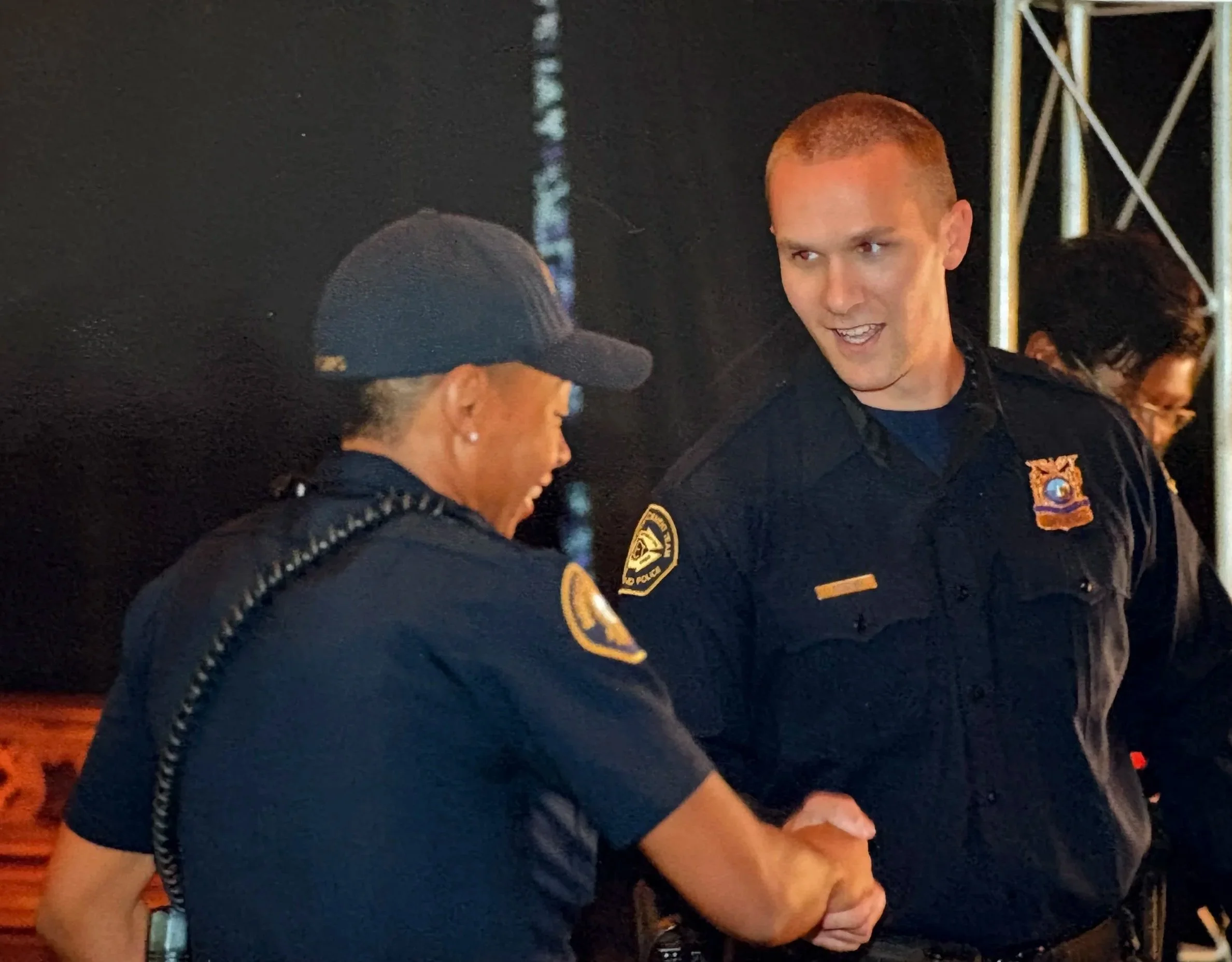
At the Portland Police Bureau, Rashida’s experience includes crisis-response coordination, community engagement, academy instruction, and peer support. As a crisis-response coordinator, she recruited and trained more than 30 community volunteers to support families during difficult moments.
Her preparation includes Level I and Level II crisis/hostage negotiation training through Crisis Systems Management LLC, service as an Enhanced Crisis Intervention Team (ECIT) officer, and public information officer training. Media interviews and public-facing communication have further shaped her approach to clarity, responsibility, and trust.
Rashida also serves as secretary of the Northwest Chapter of the National Organization of Black Law Enforcement Executives (NOBLE), reflecting her commitment to representation, mentorship, and equitable justice.
These experiences inform Leading Without Armor, her developing leadership framework and research initiative. Its conceptual working papers connect questions from public service with existing scholarship on leadership and organizational behavior.

BEYOND THE PROFESSIONAL ROLES
Rashida is a mother and basketball coach. Both roles keep her learning about the expectations adults set, the examples they offer, and how they respond when someone struggles.
They also remind her that being dependable includes knowing when to listen, reconsider, and ask for help.
Her writing and speaking draw from that ongoing examination of her own choices alongside the systems she works within.
We can become stronger without becoming harder.
That belief connects her work. It began with learning to make room for her own humanity.